
Last updated November 2, 2026
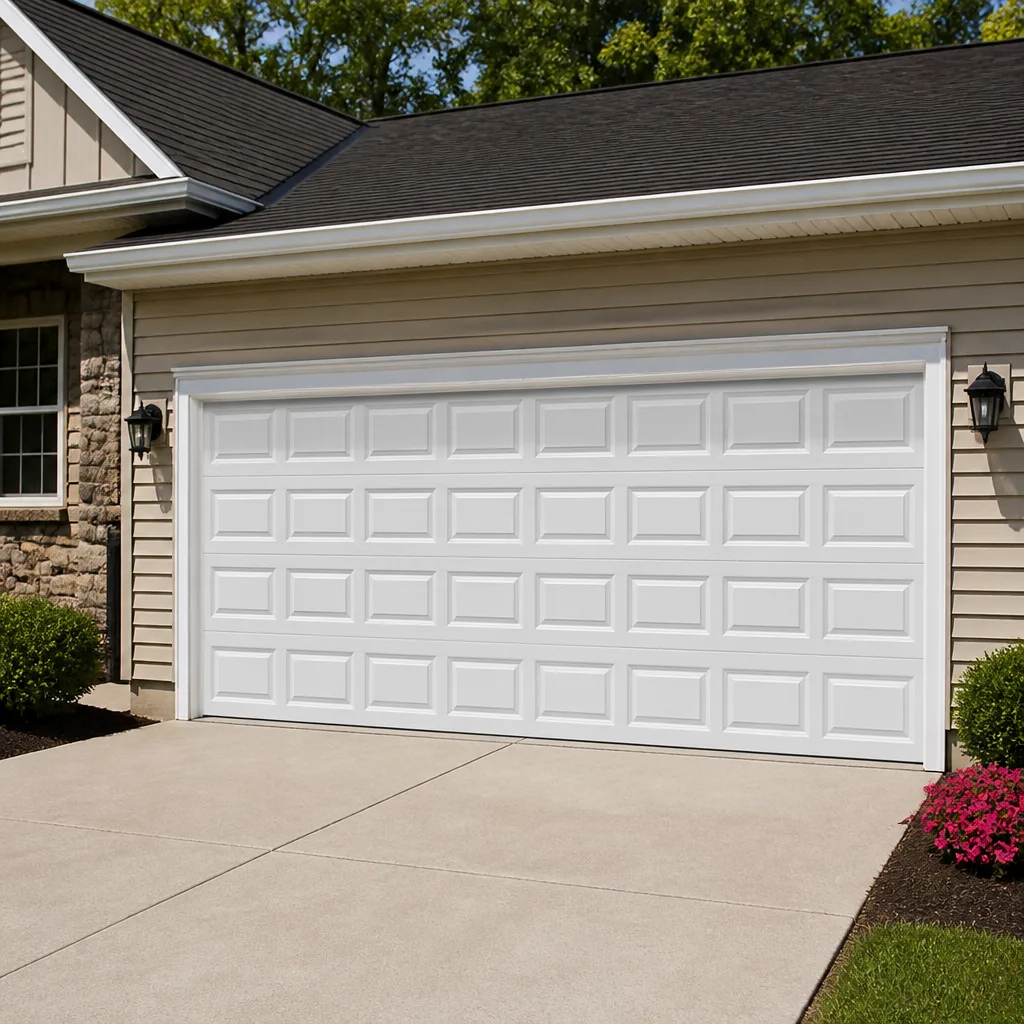 Raised-panel steel
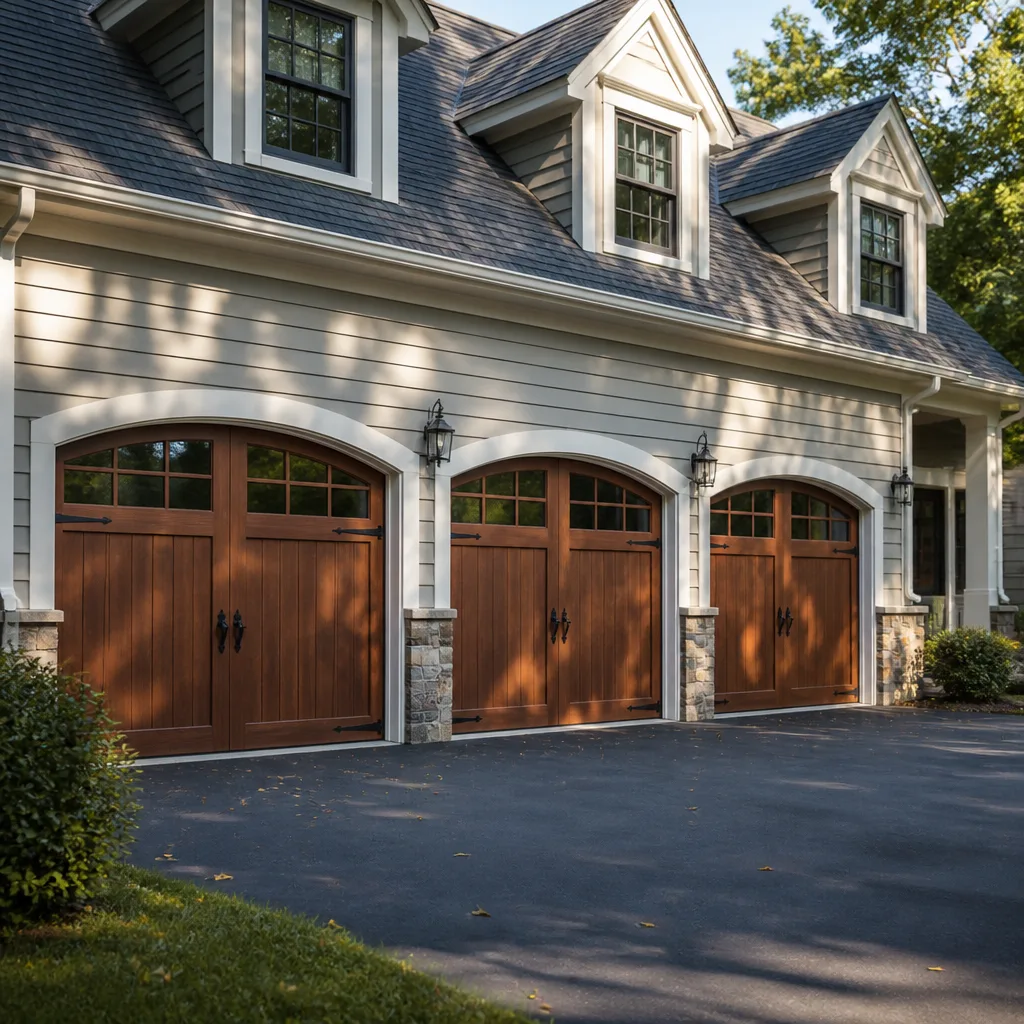 Carriage house
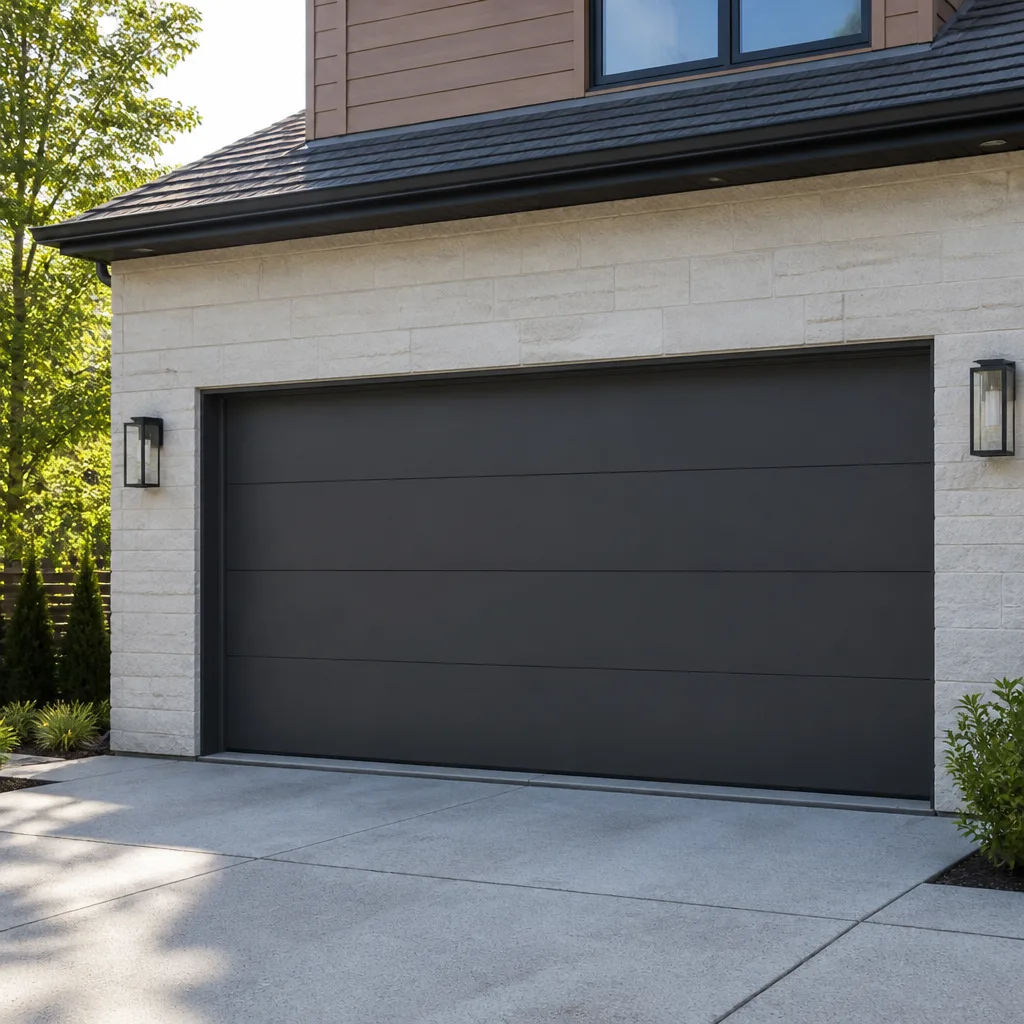 Modern flush
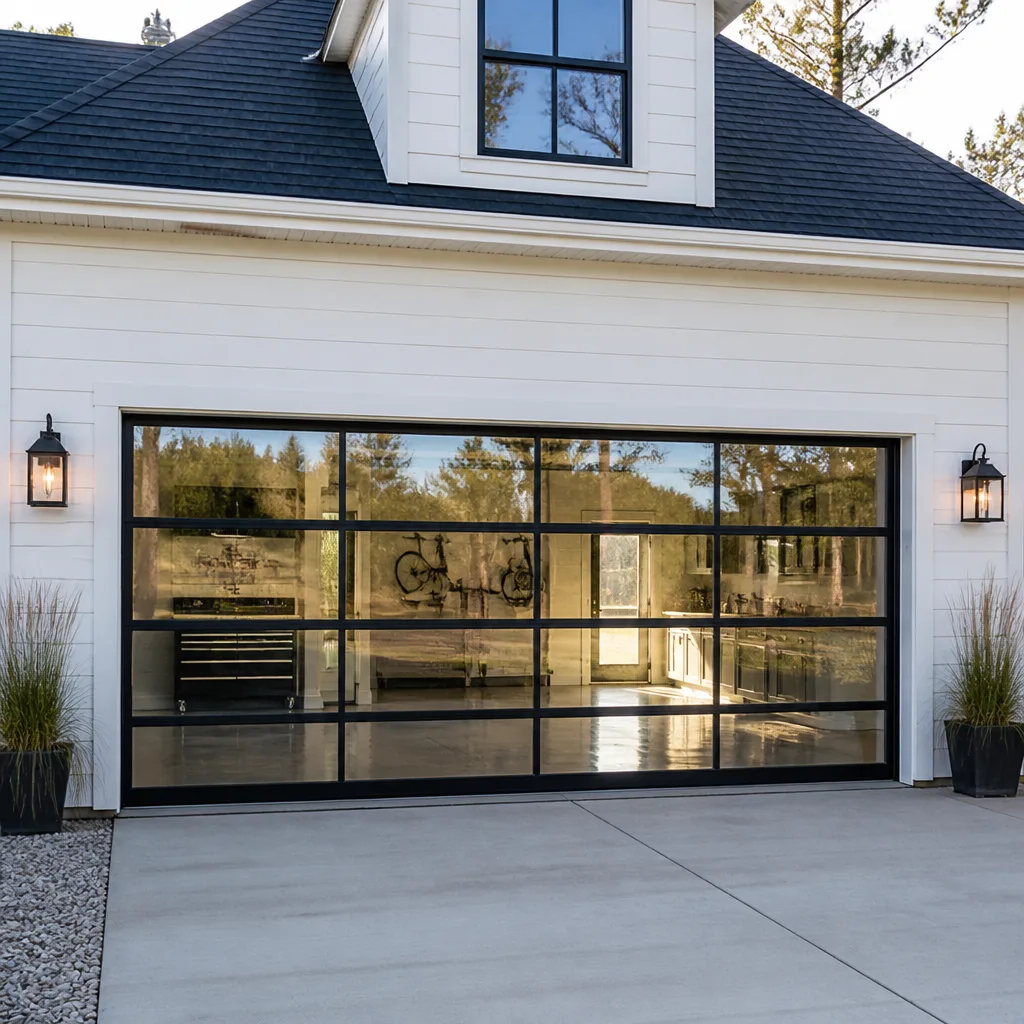 Full-view glass
 LiftMaster openers
 Chamberlain openers
Full 25-point door and opener safety check with every visit - springs, cables, rollers, tracks, and your LiftMaster or Chamberlain opener included
You get a price before we start. It does not change when the truck arrives.
Get your free estimateDIY vs Professional Garage Door: The Moreno Valley Homeowner’s Decision Guide
Torsion spring replacement sends roughly 20,000 Americans to emergency rooms every year. The spring on your Moreno Valley garage door is under 150 to 200 pounds of torque, even when the door is sitting still. That’s not a DIY judgment call. It’s a physics problem with permanent consequences. This guide walks you through exactly which garage door tasks you can handle safely in your Moreno Valley home, which ones demand a trained technician, and how to tell the difference before you touch a single tool. For more guides & resources, see our blog.
Quick Answer
Most homeowners in Moreno Valley can safely handle three things: lubrication, sensor realignment, and remote programming. Anything involving torsion springs, lift cables, or track replacement should be left to a professional. The determining factor isn’t your skill level. It’s whether a mistake can send 150 pounds of stored energy through your face, your hand, or your garage wall. If the answer is yes, call a specialist.
Styles & brands we work with
- Raised-panel steel
- Carriage house
- Modern flush
- Full-view glass
- LiftMaster openers
- Chamberlain openers
Table of Contents
- The True Cost of DIY: What Nobody Tells You
- What Homeowners Can Safely Do Themselves
- What Requires a Professional: The Danger Zone
- California Liability and HOA Exposure for DIY Work
- How Moreno Valley Heat Changes the DIY Equation
- Three Questions to Ask Before Starting Any Garage Door Task
- What DIY Gone Wrong Actually Costs to Fix
- Why Your Specific Brand Changes the Calculation
The True Cost of DIY: What Nobody Tells You
When a garage door fails in Moreno Valley, most homeowners start with a YouTube search. That’s understandable. But the videos rarely show what happens when the job goes sideways at hour three in a 95-degree garage. The real cost of DIY garage door work isn’t the parts. It’s the second service call, the additional damage, and the markup contractors charge to fix amateur repairs. See our Garage Door Cost Breakdown: The Moreno Valley Homeowner’s Reference for 2026 for detailed pricing.
Here’s what we see in the field after a DIY attempt goes wrong:
- Stripped winding cones from using the wrong-size winding bars. A torsion spring with a stripped cone can’t be safely unwound, which means cutting the spring, which means replacing parts that were still good.
- Bent tracks from forcing a door that had a broken spring. The opener pulled, the cables slipped, the panel twisted, and now a $200 spring replacement is a $900 track-and-panel job.
- Misaligned sensors that sent the door down onto a car bumper or a garbage can because the homeowner “fixed” them without testing the reversal function.
- Fried opener logic boards from wiring a replacement opener without checking voltage compatibility. Chamberlain and LiftMaster boards are especially unforgiving of crossed low-voltage wires.
- Broken windows and dented panels from releasing cable tension without securing the door first.
Then there’s the time cost. A professional garage door specialist in Moreno Valley replaces a torsion spring in 45 to 90 minutes. A first-time DIYer will spend six to eight hours, most of it watching videos, driving to two different hardware stores, and second-guessing every turn of the winding bar. Your time has value. So does your deductible.
None of this means you’re incapable. It means the margin for error on high-tension components is near zero, and the learning curve is paid for in blood, broken parts, or both.
What Homeowners Can Safely Do Themselves
There are three categories of garage door maintenance that are genuinely homeowner-appropriate. These tasks don’t involve stored energy, don’t require specialized tools, and don’t put you in the path of a falling door or a snapping cable.
1. Lubrication and Basic Maintenance
Every moving metal part on your garage door benefits from lubrication twice a year in Moreno Valley, where dry heat accelerates wear on rollers and hinges. Use a white lithium grease on the chain or screw of your opener and a silicone-based spray on rollers, hinges, and the torsion spring itself. Avoid WD-40. It’s a solvent, not a lubricant, and it will strip the existing lubrication off your parts. Do this with the door closed and the opener disconnected.
2. Photo-Eye Sensor Realignment
When your door reverses for no reason or won’t close at all, the photo-eye sensors at the bottom of each track are usually the culprit. Check that both lights are solid, not blinking. Gently adjust the brackets until the beam connects. Clean the lenses with a soft cloth. This is a no-risk task because the sensors don’t hold mechanical tension. You’re dealing with a light beam and two screws.
3. Remote and Keypad Programming
Programming a replacement remote or keypad for a LiftMaster, Chamberlain, Genie, or Craftsman opener is a 10-minute job that requires zero mechanical skill. The instructions are printed inside the opener’s light cover or available in the manual. The “Learn” button on the motor unit does the work. The only caution: if you’re replacing a Chamberlain or LiftMaster opener with smart-home capability, make sure your remote protocol matches your opener generation, because the myQ ecosystem doesn’t play well with some third-party generics.
These three tasks cover about 80% of the calls homeowners make for maintenance-level issues. For everything else, the math changes quickly.
What Requires a Professional: The Danger Zone
This section is short because the list is short. There are four components on a garage door that should never be touched by someone without professional training and the right equipment.
Torsion Springs
The torsion spring system stores all the energy needed to lift your door. That energy is released in a controlled way during normal operation. When the spring breaks, or when someone without training tries to wind or unwind it, that release becomes uncontrolled. The winding bars can kick back with enough force to break facial bones. This is the injury that generates the ER statistics. No video tutorial can teach you the feel of correct winding tension. That takes supervised repetition.
Lift Cables
The cables run alongside the door and connect to the bottom brackets. When a cable snaps, the stored tension whips the frayed steel end. When a homeowner detaches a cable while the spring is still wound, the spring unwinds violently. Even a loose cable near a wound spring is a loaded weapon. Cable replacement requires unwinding the spring first, which puts you right back into the danger zone.
Track Replacement and Realignment
Tracks guide the door through its entire travel cycle. A track that’s out of alignment puts lateral stress on every component: rollers, hinges, brackets, and the opener itself. Repairs require removing the door’s weight from the track, adjusting vertical and horizontal rails precisely, and re-tensioning the entire system. One degree off means premature wear on a door that should last 15 to 20 years in Moreno Valley’s climate.
Panel Replacement on Tensioned Doors
Replacing a single panel seems approachable until you realize the panel is under load from the springs and connected to every other panel. Removing the wrong bolt releases tension through the section joint. Most single-panel replacements turn into two-panel replacements when homeowners attempt them without a vice clamp and a second pair of trained hands.
The consistent theme: anything connected to the spring system carries stored energy. If you can’t identify where the tension lives, you shouldn’t be working on it. Our technicians can look at a door and tell you within 30 seconds whether a job is safe for a homeowner. That’s the depth of familiarity that comes from working on the same eight brands, LiftMaster, Chamberlain, Genie, Clopay, Amarr, Wayne Dalton, Craftsman, and Raynor, every single day.
California Liability and HOA Exposure for DIY Work
Moreno Valley homes sit inside HOAs at a notably high rate. Hidden Springs, Sunnymead Ranch, and the newer developments east of the 215 all carry CC&Rs with property-maintenance clauses. When a DIY garage door repair goes wrong and damages neighboring property or injures someone, the liability trail leads directly to you. Review our Garage Door Emergency Preparedness Guide for Moreno Valley Homes to plan ahead.
California law doesn’t prohibit homeowners from doing their own garage door work, though Garage Door Permits, Codes & Inspections in CA: What You Need to Know may apply in some situations. Your homeowner’s insurance policy may look at a DIY repair gone wrong differently than a professional repair gone wrong. A contractor carries general liability insurance specifically for this scenario. You carry your personal exposure.
Consider these scenarios:
- Your DIY spring replacement fails, the door comes off its tracks, and it crushes a vehicle parked in the driveway of the rental property next door. Your insurance may cover it, or may classify it as negligence. Either way, your premium is gone.
- You sell the house in two years, and the buyer’s inspector flags the garage door for non-professional repair work. You’re now negotiating a credit or fixing it properly before close.
- Your HOA notices a door that doesn’t close flush after your DIY track adjustment and issues a violation letter with a 30-day compliance window. Now you’re paying a professional to undo your work under deadline pressure.
The cost-reduction argument for DIY evaporates the moment you factor liability exposure. A licensed, insured specialist carries that risk so you don’t. When you hire garage door repair in Moreno Valley through Dynasty, the liability for the repair, the parts, and the workmanship sits on our side of the table. That’s the entire point of hiring a contractor.
How Moreno Valley Heat Changes the DIY Equation
Moreno Valley summers routinely push 95 degrees, with July and August stretches above 100. Your garage, especially a west-facing one, gets hotter than the outside air by 15 to 20 degrees. That heat isn’t just uncomfortable. It fundamentally changes the safety math on DIY garage door work.
First, heat reduces precision. Fine motor control degrades as core temperature rises. The winding of a torsion spring requires exact quarter-turn adjustments. Sweating hands, fatigue, and the urge to rush through a hot job all increase the chance of a slipped winding bar. The springs don’t care that it’s hot. The tension is the same.
Second, heat affects the materials. Metal expands. Cables stretch slightly. Lubricants thin and drip. A door that worked at morning temperature may behave differently at 3 p.m. in a 115-degree garage. DIYers don’t account for thermal expansion when setting cable tension or track alignment. That’s a mid-summer malfunction waiting to happen.
Third, heat accelerates the timeline. You can’t leave a door half-disassembled in a hot garage for five hours while you run to the store for another part. The garage is attached to the house in most Moreno Valley floor plans. An open, non-functional door at 4 p.m. means a 140-degree interior within hours, which stresses your home’s HVAC system and makes an unpleasant situation worse.
Professional technicians work in the same heat. But we work from experience, with the right tools, in a compressed window, and with a full parts inventory that eliminates the mid-job store run. The heat is a constant. The risk appetite doesn’t have to be.
Three Questions to Ask Before Starting Any Garage Door Task
Before you touch any component of your garage door, answer these three questions honestly. If you can’t answer all three with a definitive yes, stop and call a professional.
- Do I know exactly where the stored energy is in this system right now? If you can’t point to the spring, the cable, or the bracket holding tension, you don’t understand the system well enough to work on it. The energy is always there. The question is whether you know its location and direction.
- If this goes wrong in the worst possible way, what’s the injury I’m risking? A scraped knuckle is DIY territory. A snapped cable through the eye or a winding bar to the face is not. Be specific. Visualize the failure mode. If the answer involves a hospital, that’s your stop sign.
- Do I have the exact parts, tools, and time to finish this job today? Half a repair is worse than no repair in Moreno Valley’s heat. If you need to order a part, borrow a tool, or leave the job overnight with the door inoperable, you’ve already lost. Professionals carry the parts on the truck.
These questions work because they remove ego from the decision. This isn’t about whether you could learn to do it. It’s about whether the risk-adjusted math makes sense for this specific job on this specific day.
What DIY Gone Wrong Actually Costs to Fix
Contractors charge more to fix DIY attempts than to do the job correctly the first time. That’s not a gatekeeping sentiment. It’s a pricing reality based on time and risk. A botched spring replacement often means a second spring replacement to correct the winding, plus new cables, potentially a new spring anchor bracket, and an opener recalibration.
Here’s a realistic cost comparison for common scenarios in Moreno Valley:
- Standard torsion spring replacement, done professionally: One visit, parts and labor, door operates correctly by evening.
- DIY spring attempt with stripped winding cone: Spring replacement plus new center bearing plate, possibly new winding bars that got bent, and a service call fee for a diagnosis before any repair begins.
- DIY track realignment that bent the horizontal rail: New track section, re-hang, roller check, opener force adjustment, and the cost of the parts you already bought and can’t return.
- DIY opener wiring that shorted the logic board: New board or new opener unit, which in the LiftMaster and Chamberlain smart lines can exceed the cost of a professional opener installation in the first place.
The pattern: the DIY savings evaporates, and then the bill exceeds the original professional quote. We see it every month. A customer tries to save $200, spends $150 on parts and tools, then pays $450 for us to correct the damage. The math never works out in their favor on spring, cable, or track work.
If you want a straight answer on whether a repair is worth doing yourself, call us. We’ll tell you honestly. Some things genuinely are homeowner tasks, and we’d rather see you do those well than pay us for a 10-minute fix. That’s the long-term view of a company built on the Dynasty name, which means work that lasts, not a quick buck on a service call.
Why Your Specific Brand Changes the Calculation
Garage doors aren’t interchangeable. A Wayne Dalton TorqueMaster spring system is mechanically different from a standard torsion setup. A Raynor door uses different track profiles than a Clopay. A Chamberlain opener with myQ compatibility has different wiring and programming requirements than a bare-bones Craftsman chain drive from 2008.
This matters for the DIY calculation because the YouTube video you’re watching was probably filmed on a different brand and model than what’s in your garage. The principle may translate. The specifics won’t. The bolt sizes, the winding cone diameter, the cable drum geometry, the opener logic, the bracket placement. All of it varies.
We work on all these systems every week. Our technicians know the difference between a garage door opener repair in Moreno Valley for a Chamberlain smart unit and a 15-year-old Genie screw drive. They know which Wayne Dalton doors need a conversion kit and which ones accept standard springs. That brand-level familiarity means a 45-minute job stays a 45-minute job instead of becoming a four-hour troubleshooting session.
When you’re evaluating a DIY project, ask yourself: does the tutorial match my exact equipment, or am I improvising? If you’re improvising on a component under tension, that’s your answer. For anything involving a new door entirely, the equation is different, and garage door installation in Moreno Valley through a specialist who knows all eight major brands from the factory side means the door fits the opening, the opener integrates correctly, and the whole system is tuned from day one.
We also stock parts for the brands we service. A DIYer has two options in Moreno Valley: special-order a part through a hardware store and wait three to five days, or improvise with a part that might sort of fit. Neither is a good option when your garage is stuck open in August.
Common Mistakes to Avoid
- Using screwdrivers as winding bars. Torsion springs require solid steel winding bars of the exact diameter. Screwdrivers bend, slip, and kick back under load. We’ve pulled broken screwdriver tips out of drywall, and worse.
- Disconnecting the opener while the door is up. If you pull the emergency release with the door in the raised position and the spring is broken or weak, the door comes down like a guillotine. Always disconnect with the door closed, or call someone who knows how to secure the door first.
- Replacing only one spring on a two-spring system. When one spring breaks, the other is near the end of its cycle. Replacing one means the other breaks in three months, and you pay for a second service call for the same door. Replace both. Always.
- Buying parts online based on price. A $40 generic spring from an online marketplace isn’t calibrated to your door’s weight and cycle count. Undersized springs break early. Oversized springs strain the opener. Neither is worth the gamble.
- Ignoring the door’s balance test. After any DIY maintenance, disconnect the opener and lift the door halfway. It should stay put. If it drops or climbs, the spring tension is wrong, and the door needs professional adjustment. Skipping this test turns a minor issue into a major failure.
- Working alone. Even maintenance tasks like panel realignment are safer with a second person. On anything involving spring or cable tension, working alone is how minor accidents become major injuries. No one is there to call 911.
- Assuming new equals safe. A brand-new spring is just as dangerous as a broken one during installation. The energy doesn’t distinguish between old and new parts. Respect the tension regardless of the component’s age.
See the difference
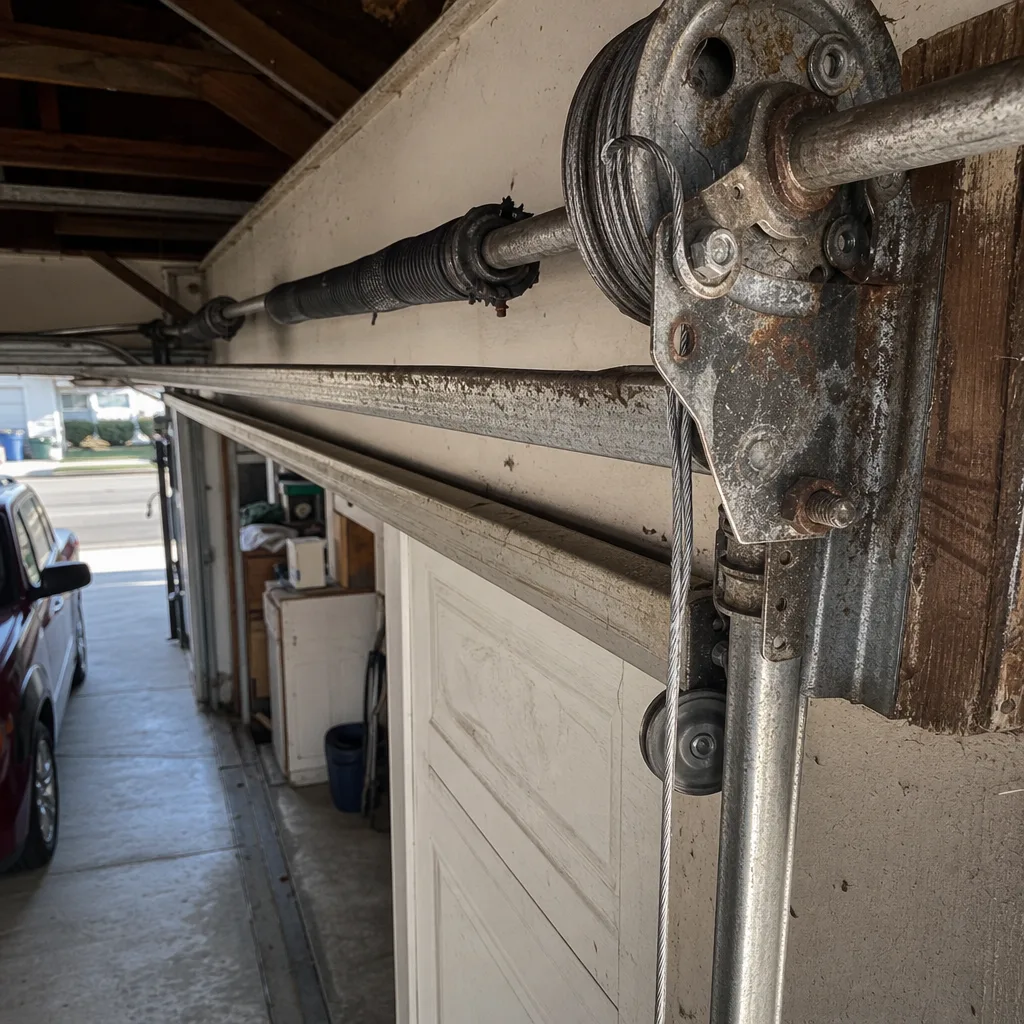 Before
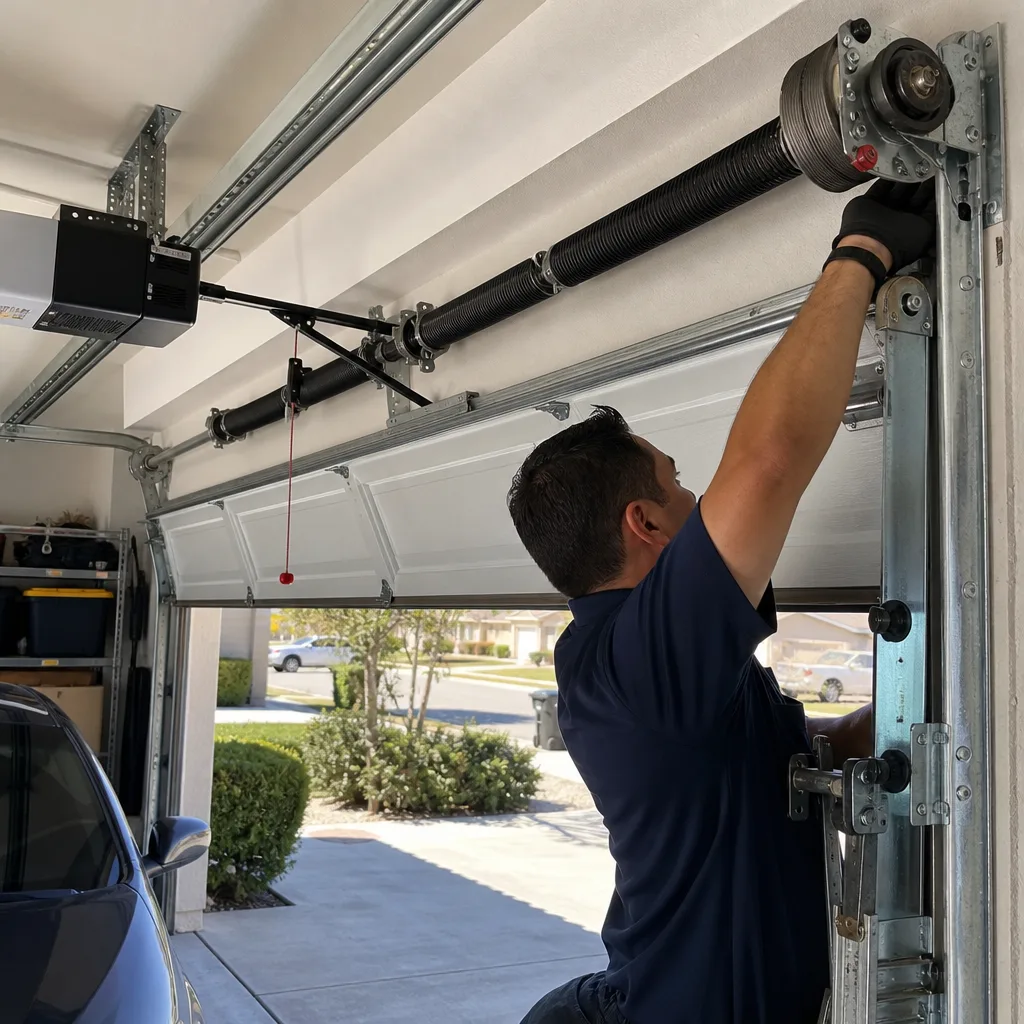 After
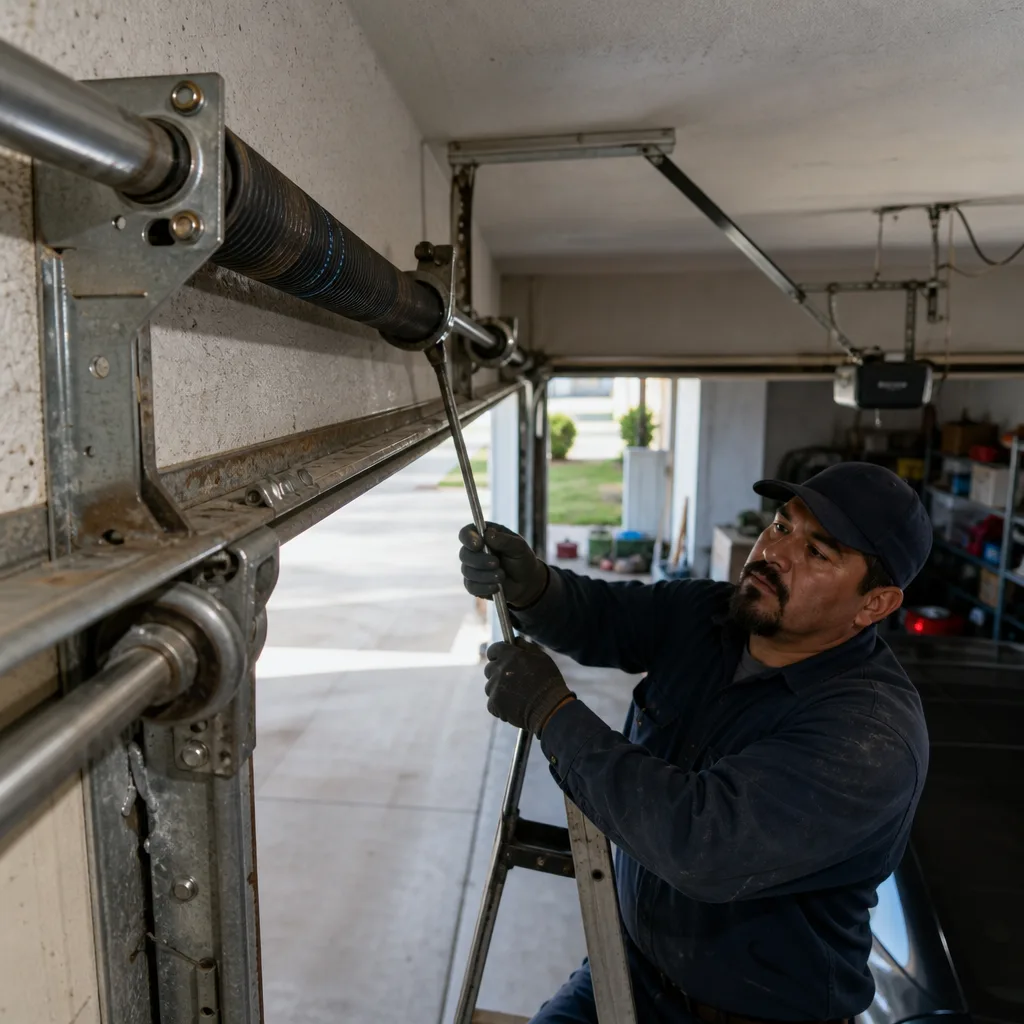 Before
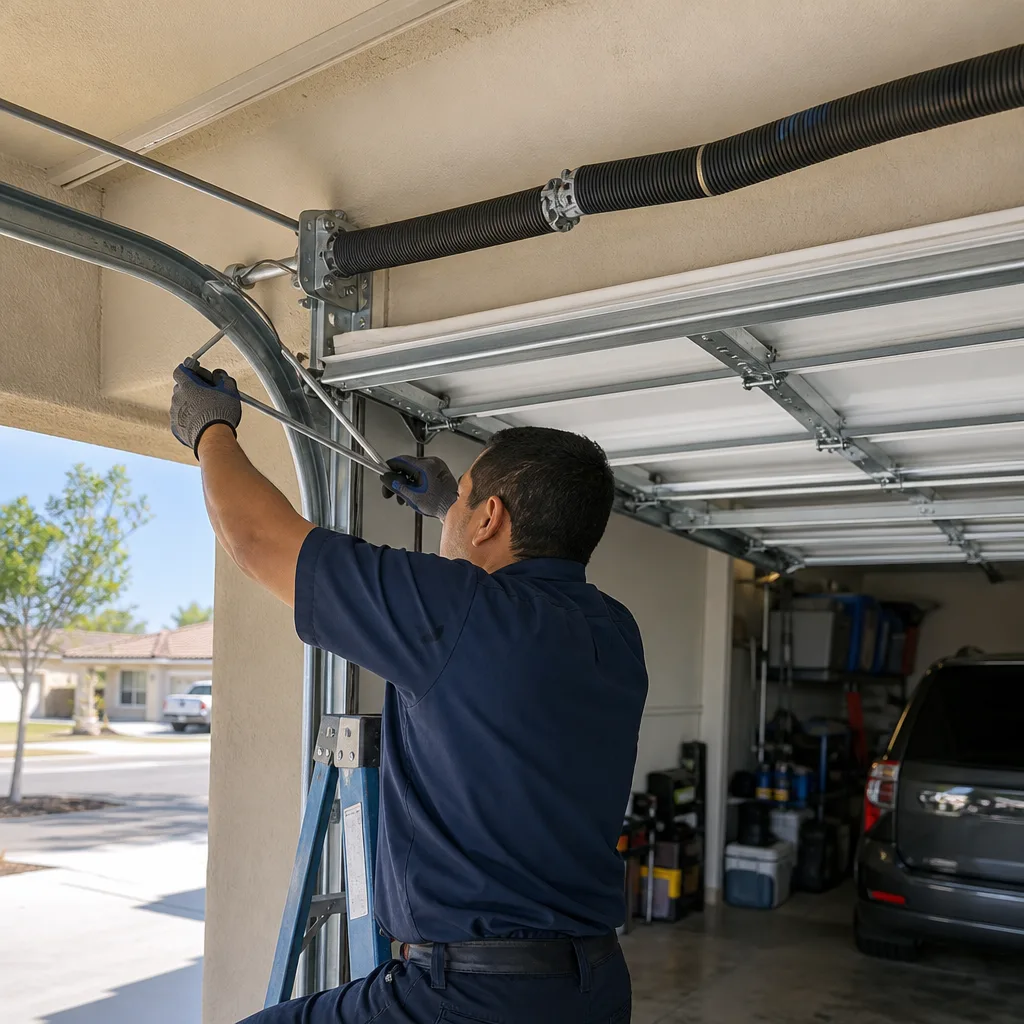 After
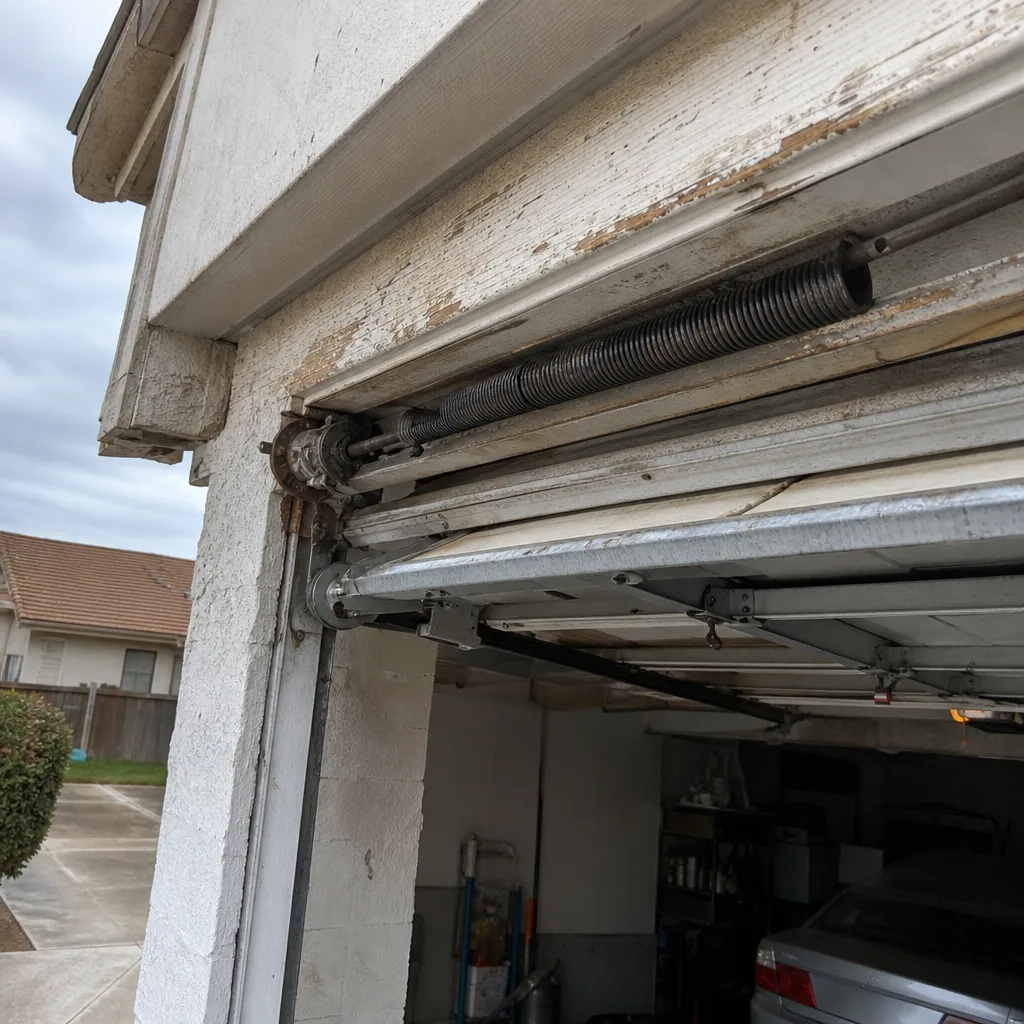 Before
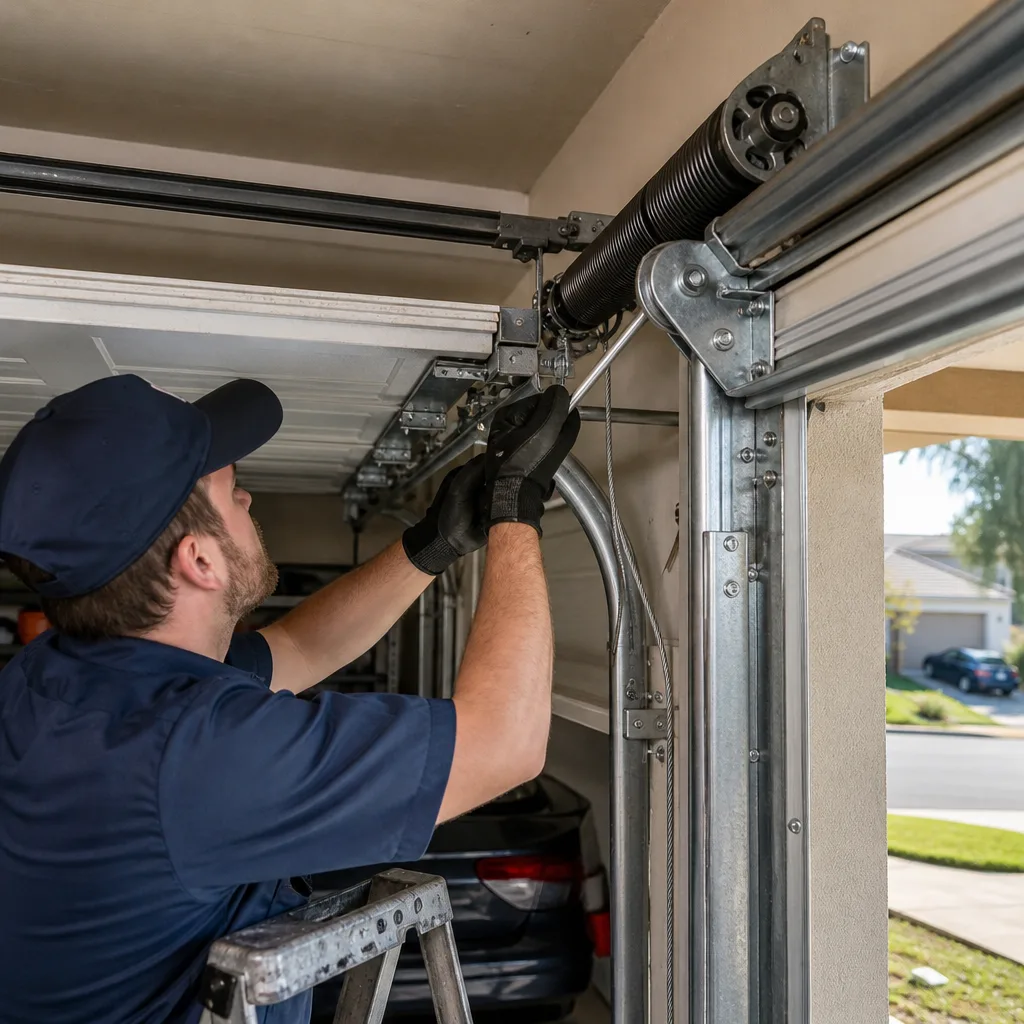 After
When to Call a Professional
Call a professional when the job involves stored mechanical energy, when the failure mode can cause injury, when you don’t have the exact parts for your exact brand, or when you’ve already spent two hours on a task and the door isn’t functioning better than when you started. Call before you attempt spring work. Call before you touch a cable. Call when the door is stuck in the open position and you’re not sure how to secure it. Call when your smart opener won’t pair and you’ve factory-reset it twice already. Call when the damage is visible, the cause is not, and the garage is attached to the house you sleep in.
Dynasty Garage Door Repair offers free estimates in Moreno Valley. Call (866) 623-1879. We’ll assess the job, tell you whether it’s something you can handle yourself, and give you an honest price for the work if you want us to do it. Garage doors are all we do. The eight brands we service daily, LiftMaster, Chamberlain, Genie, Clopay, Amarr, Wayne Dalton, Craftsman, and Raynor, are the same eight brands in Moreno Valley garages. Visit the Dynasty Garage Door Repair home page to see the full scope of what we handle.
Frequently Asked Questions
For lubrication, sensor alignment, and remote programming, yes. For springs, cables, tracks, or panel replacement, no. The savings on professional labor disappears the moment a high-tension component fails during amateur repairs, and the medical or additional repair costs exceed the original quote. In Moreno Valley, summer heat compounds the difficulty and risk of any job that takes more than an hour.
Professional garage door repair in Moreno Valley varies by component and brand. Spring replacement, opener repair, and cable replacement each carry different price points. A free estimate from a specialist gives you an exact number before any work begins. Call (866) 623-1879 and we’ll quote your specific door and brand, no obligation.
No. Torsion springs require solid steel winding bars of the correct diameter, and extension springs require specific safety cables and hardware. Improvising tools is how the catastrophic injuries happen. This is not a judgment on your capability. It’s the reality of working with 150 to 200 pounds of stored torque.
Standard springs are rated for 10,000 cycles, which translates to roughly 7 to 10 years in a typical Moreno Valley home where the door cycles three to four times daily. Extreme heat doesn’t shorten the calendar life directly, but it can thin lubricants and cause premature wear on supporting components. Annual maintenance extends functional life and catches developing issues early.
The most common mistake is replacing only one spring on a two-spring system. The unbroken spring is at the end of its life cycle, and within months it snaps too, requiring a second service call. The fix costs less when both springs are replaced at once, and the door rebalances correctly from day one.
Often, yes. Contractors charge for the additional time to assess and correct amateur work, which can include replaced parts, re-tensioning, and recalibration. The total cost frequently exceeds what the professional repair would have been originally. If you’re unsure whether a task is safe, call first and ask. A good specialist will tell you honestly.
The Bottom Line
The DIY versus professional decision for garage doors isn’t about competence. It’s about correctly categorizing risk. Lubrication, sensor adjustment, and remote programming are safe homeowner tasks. Springs, cables, tracks, and panels carry injury and liability exposure that training, tools, and insurance are designed to absorb. Moreno Valley’s heat amplifies the difficulty of any job that runs long, and the brand-specific nature of garage systems means generic tutorials rarely match your exact equipment. When the job involves stored energy, call a specialist. The cost of a professional repair is cheaper than the cost of a mistake. Call (866) 623-1879 for a free estimate on any Moreno Valley garage door issue.
Written by the team at Dynasty Garage Door Repair, serving Moreno Valley since 2017.